Hidden Beats of Hua Hin: My Secret Festival Escapes Beyond the Tourist Trail
You know that feeling when you stumble upon something magical no one else seems to know about? Hua Hin’s festival scene is way more than just beach vibes and weekend markets. I’m talking about lantern-lit processions, local harvest cheers, and rhythms pulsing through quiet village streets. These aren’t in the guidebooks, but they’re real, raw, and absolutely stunning. If you’re craving authenticity over crowds, let me take you where the locals celebrate—and why these hidden moments are the soul of Thai culture.
Beyond the Postcard: Why Hua Hin’s True Spirit Lives in Its Festivals
Most travelers picture Hua Hin as a sun-drenched coastal escape with palm-lined avenues, royal summer palaces, and seafood stalls lining the pier. While these attractions have their charm, they only reveal one side of this graceful Thai town. Beneath the polished surface of tourist-friendly beaches and boutique resorts lies a quieter, deeper rhythm—the pulse of community life marked by seasonal festivals that have shaped local identity for generations. These events are not staged for visitors; they unfold naturally, rooted in faith, agriculture, and shared history. They represent the heart of what makes Thai culture so enduring and warm: a deep respect for tradition, family, and the cycles of nature.
When you attend a local festival in Hua Hin, you're not watching a performance—you're stepping into a living story. Unlike the curated experiences offered at commercial venues, these celebrations invite participation, observation, and reflection. Whether it's the soft glow of candlelight on water during Loy Krathong or the joyful chaos of Songkran in a village square, each moment offers a chance to connect not just with Thai customs, but with the people who carry them forward. For women between 30 and 55—many of whom travel to recharge, reflect, and find meaning beyond daily routines—these intimate cultural encounters can be profoundly moving. They remind us that travel isn't only about seeing new places, but about feeling part of something larger than ourselves.
The value of such experiences goes beyond personal enrichment. By choosing to explore beyond the tourist trail, travelers support local economies, preserve traditions, and foster mutual understanding. In an age where many destinations feel increasingly homogenized, Hua Hin’s hidden festivals offer something rare: authenticity. These gatherings are not designed for Instagram likes or souvenir sales. They exist because they matter—to the communities that hold them sacred. To witness them is to receive a quiet gift, one that asks nothing in return but respect and presence.
Loy Krathong Whispered: A Quiet Riverside Ritual Away from the Crowds
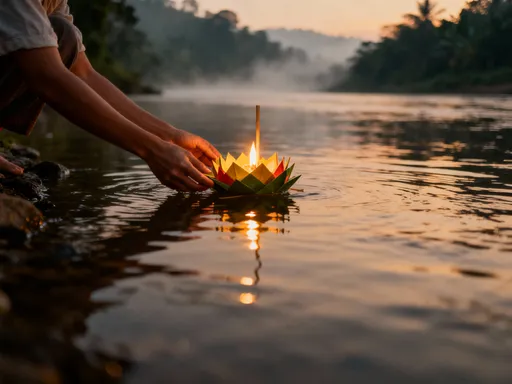
Every November, across Thailand, rivers and canals shimmer with thousands of floating krathongs—delicate lotus-shaped rafts made of banana leaves, decorated with candles, incense, and flowers. In cities like Bangkok or Chiang Mai, Loy Krathong is a dazzling spectacle, complete with fireworks, music stages, and massive crowds. But just a short drive north of Hua Hin, along the calm banks of the Pran Buri River, a different kind of celebration takes place—one that embodies the true spirit of this ancient festival.
Here, families gather at dusk, carrying handcrafted krathongs they’ve made together. Children light the candles with careful concentration, while elders chant quiet prayers, asking forgiveness from the water goddess and releasing worries from the past year. The air carries the scent of jasmine and sandalwood, mingling with the earthy aroma of damp riverbanks. There are no loudspeakers, no vendors hawking souvenirs, no rush to take selfies. Instead, there’s a gentle hush as dozens of glowing offerings drift slowly downstream, their reflections flickering like stars on black water.
This version of Loy Krathong is not advertised online or listed in tour brochures. It happens because it always has—in this small riverside community where life remains closely tied to nature’s rhythms. To witness it is to understand that some of the most powerful travel moments are those that unfold in silence. For women seeking peace and reflection, this experience offers a rare opportunity to slow down, breathe deeply, and reconnect with inner stillness. It’s not about escaping reality, but about remembering what truly matters: gratitude, renewal, and the quiet beauty of shared rituals passed from one generation to the next.
Songkran Like a Local: Water Fights with Soul in Village Squares
Songkran, Thailand’s famous New Year festival, is often portrayed as a nationwide water fight—an exuberant, high-energy celebration where streets turn into splash zones and tourists drench each other with hoses and buckets. While that version exists in tourist hotspots, the traditional essence of Songkran runs much deeper, especially in the rural villages surrounding Hua Hin.
In these communities, Songkran begins with reverence. At dawn, families visit temples to offer food to monks, clean Buddha images, and pour scented water over the hands of elders—a gesture known as rod nam dum hua, a sign of respect and a request for blessings. Children kneel before grandparents, who place gentle hands on their heads and whisper words of wisdom and hope for the year ahead. This quiet, tender exchange forms the emotional core of the holiday, long before the playful splashing begins.
By midday, the mood shifts. Village squares come alive with laughter as neighbors gather with small buckets, water pistols made from bamboo, and coconut shells. The water fights here are joyful but never aggressive—more like a communal dance than a battle. Elders sit under shaded pavilions, smiling as they watch grandchildren dart through streams of water, their faces bright with delight. Unlike the all-night parties in city centers, these celebrations end early, giving way to family meals and rest.
For visitors, participating respectfully means understanding the balance between fun and tradition. Wearing modest clothing, avoiding strong perfumes or ice-cold water, and asking before joining in are small gestures that go a long way. When done right, being part of a local Songkran celebration feels less like tourism and more like being welcomed into a family ritual. It’s a reminder that joy doesn’t require extravagance—sometimes, it’s found in the simple act of sharing water, laughter, and a wish for good fortune.
The Royal Agricultural Fair: Where Tradition Meets Celebration
Each year, usually in January or February, the Cha-am Agricultural Research Center hosts one of Hua Hin’s most unique and uplifting events: the Royal Agricultural Fair. Originally established to promote sustainable farming and rural development, this week-long gathering has evolved into a vibrant celebration of Thailand’s agrarian heritage. For families and curious travelers alike, it offers a refreshing alternative to beachside lounging—an opportunity to learn, engage, and celebrate the land that feeds the nation.
Walking through the fairgrounds, you’ll see rows of exhibition tents displaying everything from prize-winning mangoes to drought-resistant rice varieties. Farmers proudly present their harvests, explaining techniques passed down through generations and enhanced by modern science. Livestock competitions draw crowds, with judges carefully assessing water buffalo, goats, and chickens based on health, strength, and conformation. Children press their faces against ropes, giggling as a particularly majestic bull tosses its horns in the show ring.
But the fair is more than an educational showcase. Folk dancers in traditional costumes perform across open-air stages, their movements telling stories of planting and harvest. Cooking demonstrations highlight seasonal ingredients, with grandmothers teaching young women how to prepare dishes like spicy som tam or coconut-based curries using locally grown produce. Artisans sell handwoven baskets, natural dyes, and herbal remedies, preserving skills that might otherwise fade in a modernizing world.
What makes this event especially meaningful is its grounding in purpose. It honors the quiet dignity of farmers, whose labor sustains communities yet often goes unnoticed. For women who value sustainability, family, and heritage, the Royal Agricultural Fair offers a hopeful vision of how tradition and progress can coexist. It’s a place where knowledge is shared freely, where children learn the names of crops, and where respect for the earth is celebrated as both a practical necessity and a cultural treasure.
Fishing Village Festivals: Blessing the Boats and the Sea
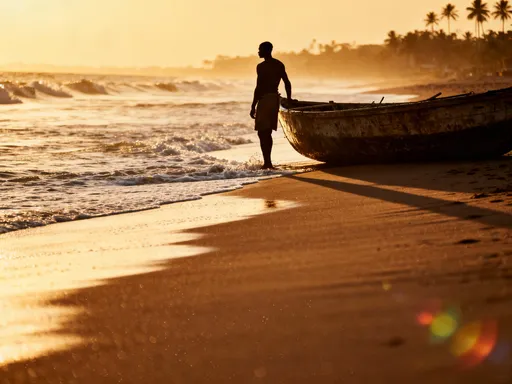
Along Hua Hin’s coastline, small fishing communities like Khao Takiab maintain a way of life that has changed little over decades. Their days begin before sunrise, when boats head out to sea, and end at dusk, when nets are mended and families gather for dinner. Central to their identity is a deep reverence for the ocean—an unpredictable provider that demands both courage and gratitude. This relationship is honored each year during the Boat Blessing Ceremony, a moving festival that blends Buddhist ritual with maritime tradition.
Held at the start of the fishing season, usually in late spring or early summer, the ceremony sees fishermen paint and decorate their vessels with bright colors and sacred symbols. At dawn, monks from the local temple arrive at the docks, carrying incense and prayer beads. As families and crew members look on, the monks walk along each boat, chanting blessings and tying protective threads around the masts. The scent of jasmine and sandalwood fills the air, mingling with the salt spray. Colorful pennants flutter above the boats, believed to bring good luck and safe passage.
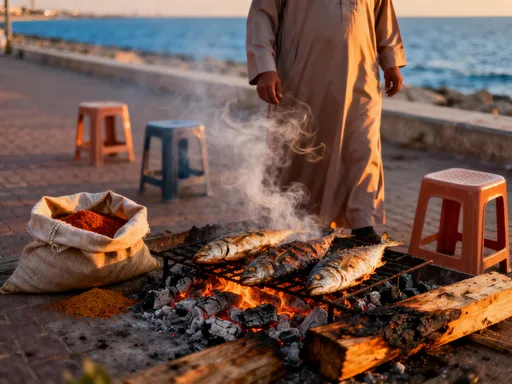
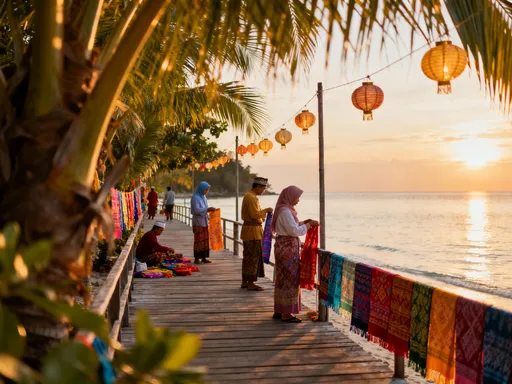
After the blessings, a communal meal is served—simple dishes like grilled fish, sticky rice, and fresh mango—shared among neighbors and visitors alike. There’s music, too: traditional songs played on wooden xylophones and stringed instruments, their melodies rising above the sound of waves. Children run between tables, laughing, while elders recount stories of storms weathered and bountiful catches.
This festival is not a tourist attraction. It’s a spiritual and social anchor for the community, a moment to pause, give thanks, and seek protection for the months ahead. For travelers, witnessing it is a privilege—one that requires quiet observation and respectful distance. Yet, when approached with humility, it offers a rare glimpse into a life shaped by nature’s rhythms and communal bonds. In a world that often feels fast and disconnected, such moments remind us of the strength found in tradition, faith, and shared purpose.
How to Find These Hidden Celebrations: Timing, Respect & Local Connections
Discovering Hua Hin’s hidden festivals doesn’t require insider status—but it does require intention. These events are rarely advertised in international travel guides or hotel brochures. Instead, they’re shared through word of mouth, temple bulletins, and community notice boards. The key to finding them lies in slowing down, building relationships, and traveling with an open heart.
Start by timing your visit around major Thai holidays. Loy Krathong (November), Songkran (April), and the Royal Ploughing Ceremony (May) are national events with local variations that often include lesser-known village celebrations. Even if you don’t know the exact date or location, arriving during these seasons increases your chances of stumbling upon something special. Staying in family-run guesthouses rather than large resorts also helps—you’re more likely to hear about nearby events from hosts who are part of the community.
Building local connections is essential. A simple smile and a few phrases in Thai—like sawasdee (hello) or kap kun kha (thank you)—can open doors. Chat with shop owners, market vendors, or temple volunteers. Ask gently: “Mee ngan wat yang rue?” (“Is there a temple festival happening?”). Most people appreciate the interest and will gladly point you in the right direction, even if they don’t speak English.
When you do attend a local event, remember that you are a guest. Dress modestly—cover shoulders and knees, especially at religious ceremonies. Avoid loud behavior, flash photography, or interrupting rituals. Observe first, participate only when invited. Bring a small offering if appropriate, like flowers or incense, as a sign of respect. These gestures may seem small, but they communicate something powerful: that you value their traditions not as entertainment, but as something sacred.
Why These Moments Matter: Travel That Transforms
In the end, the most memorable journeys are not measured in miles traveled or photos taken, but in moments of connection—those quiet instants when the world feels a little smaller, a little kinder, and a little more human. Hua Hin’s hidden festivals offer exactly that: not just sights to see, but experiences to feel. They remind us that culture is not something to consume, but to witness, honor, and carry within us.
For women who travel not just to escape, but to grow, these celebrations offer a rare gift: the chance to step outside the familiar and into a different rhythm of life. They challenge the idea that travel must be convenient, fast, or luxurious. Instead, they invite us to embrace slowness, humility, and presence. To sit quietly by a river at night. To kneel with children as they light candles. To share a meal with strangers who welcome you like family.
These are not just travel memories—they are transformations. They shift our perspective, soften our hearts, and deepen our appreciation for the quiet beauty of everyday life. In a world that often feels divided, such moments remind us of what unites us: the need for belonging, the power of tradition, and the universal desire to celebrate life’s blessings.
So the next time you plan a trip to Hua Hin, look beyond the postcard. Seek the unseen. Listen for the rhythm of life as it’s truly lived. Because sometimes, the most extraordinary experiences are the ones no one told you about—the ones waiting quietly, like lanterns on water, ready to guide you home.