You Won’t Believe What I Found in Pokhara’s Hidden Architecture
Nestled between the Annapurna range and serene Phewa Lake, Pokhara is more than just a trekker’s paradise. I went searching for peace but stumbled upon something unexpected—architecture that tells stories. From traditional stone-and-timber homes to sacred temples with carved wooden windows, every structure feels alive with culture. This is not just sightseeing; it’s a journey into how people live, believe, and build. Let me take you where travel guides don’t go—into the soul of a city shaped by nature and tradition.
First Glimpse: The Quiet Charm of Pokhara’s Urban Landscape
Arriving in Pokhara, one is immediately struck not by grand monuments, but by a quiet architectural harmony. Unlike Nepal’s bustling capital, Kathmandu, where concrete towers rise unevenly against the skyline, Pokhara unfolds gently along the hillsides, its built environment bowing respectfully to the natural terrain. Buildings rarely exceed three stories, their sloped roofs echoing the contours of the surrounding mountains. This deliberate restraint is not accidental—it reflects a deep-rooted understanding that beauty here lies in balance. The city does not dominate the landscape; it listens to it.
Walking through neighborhoods like Srijunga and Old Bazaar, travelers encounter homes constructed with local stone, timber, and mud mortar. These materials age gracefully, their warm tones blending with the greenery and soft mountain light. Red-tiled roofs, often made from locally fired clay, shed monsoon rains efficiently while insulating interiors from winter chill. What stands out most is the absence of visual clutter—no neon signs, few billboards, and almost no glass facades. Instead, wooden balconies, hand-carved eaves, and small courtyards invite quiet contemplation. Even newer constructions in these areas often mimic traditional forms, preserving the visual continuity of the streetscape.
This architectural humility enhances the visitor’s experience in profound ways. Uninterrupted views of the Annapurna range remain accessible from many vantage points, not just tourist hotspots. The lack of towering buildings means breezes move freely through the city, carrying the scent of frangipani and damp earth. More than aesthetics, this design philosophy supports well-being. Studies on urban environments have shown that exposure to natural materials and low-rise settings reduces stress and improves mood—something many visitors unknowingly benefit from during their stay. In Pokhara, architecture doesn’t just house people; it nurtures them.
Yet this harmony is not without challenges. As tourism grows, so does pressure to accommodate more guests, shops, and services. Some newer developments along the main roads begin to deviate from this ethos, favoring speed and cost over sustainability. Still, in quieter lanes and residential zones, the original character endures. For the mindful traveler, these pockets offer a rare glimpse into a way of building that prioritizes community, climate, and cultural memory over convenience and profit.
Traditional Newari Influence: Wood, Stone, and Spiritual Symmetry
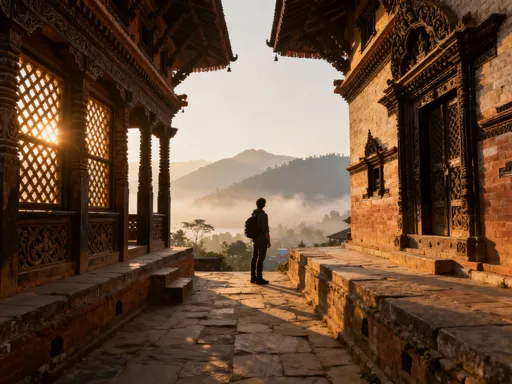
Among the most enduring legacies in Pokhara’s built environment is the influence of Newari craftsmanship, originating from the Kathmandu Valley but adapted beautifully in this western region. Though Pokhara is ethnically diverse, the Newari architectural tradition has left an indelible mark on its older structures, particularly in homes, community buildings, and temples. This style is instantly recognizable: red-brick walls, intricately carved wooden struts supporting overhanging eaves, and latticed windows known as *tikijhyas*, which filter sunlight into geometric patterns on earthen floors.
These designs are far more than decorative. Each element serves a purpose shaped by centuries of lived experience. The wooden struts, often carved with deities or mythological figures, are not merely ornamental—they act as structural reinforcements, absorbing seismic shocks common in this earthquake-prone region. The sloped, tiled roofs efficiently channel heavy monsoon rains away from walls, while deep eaves provide shade during the intense summer months. Courtyards, or *choks*, serve as communal hubs for family gatherings, religious rituals, and natural ventilation, creating microclimates that keep interiors cool.
What makes Newari architecture truly remarkable is its integration of spiritual symbolism into everyday spaces. The layout of homes often follows a mandala-like symmetry, reflecting cosmic order. Doorways face auspicious directions, and thresholds are designed to welcome positive energy while warding off negativity. Even the placement of windows follows Vastu principles, aligning with natural light cycles and seasonal winds. This deep connection between belief and structure reveals a worldview where the sacred is not separate from daily life but woven into the very walls of one’s home.
Today, some guesthouses and cultural centers in Pokhara consciously preserve these techniques. A growing number of architects are collaborating with traditional artisans to restore old buildings or construct new ones using authentic methods. These efforts are not just about nostalgia—they represent a sustainable alternative to modern construction. Using locally sourced materials reduces carbon footprint, while time-tested designs naturally regulate temperature and withstand environmental stresses. For travelers, staying in such a space is not just comfortable—it’s educational. It offers a tangible connection to a culture that values resilience, artistry, and harmony.
Sacred Spaces: Temples as Living Artifacts
In Pokhara, temples are not relics frozen in time—they are living, breathing parts of daily life. Among the most revered is the Bindhyabasini Temple, perched on a hilltop overlooking the city and Phewa Lake. Dedicated to a form of the goddess Durga, this pagoda-style temple rises in tiered layers, its roof adorned with golden finials and bells that chime softly in the wind. Pilgrims climb the stone steps barefoot, offering flowers, incense, and prayers at dawn and dusk. The temple’s elevated position is no accident; it symbolizes spiritual ascent, offering both physical and metaphysical vantage points.
Equally significant is Tal Barahi Temple, located on an island in the middle of Phewa Lake. Accessible only by boat, this two-story pagoda stands in still waters, its reflection shimmering like a mirage. Surrounded by water, it embodies purity and detachment—qualities central to its spiritual meaning. Locals believe the temple protects the lake and the city from natural disasters, and its continued maintenance reflects a deep communal commitment. Unlike many tourist attractions reduced to photo opportunities, Tal Barahi remains a place of active worship, where rituals unfold without performance for visitors.
What sets these temples apart from modern religious structures is their craftsmanship. Built without nails, using interlocking wooden beams and stone foundations, they have withstood decades of weather and seismic activity. The carvings on their struts and doorframes—depicting deities, mythical creatures, and floral motifs—are hand-chiseled by skilled artisans, each stroke carrying intention and devotion. Compare this to mass-produced shrines made from concrete and synthetic paint, and the difference is stark. The older temples feel alive, imbued with the energy of countless prayers and the patience of generations.
Local communities play a crucial role in preserving these sites. Annual festivals like Dashain and Teej bring families together to clean, repaint, and re-consecrate temples. These rituals are not just religious—they reinforce cultural identity and intergenerational bonds. For travelers, witnessing such events offers a rare window into authentic Nepali life. It’s a reminder that architecture, when rooted in community, becomes more than shelter—it becomes memory, meaning, and continuity.
The Rise of Eco-Lodges and Sustainable Design
As global awareness of environmental issues grows, so does a new wave of architectural innovation in Pokhara—one that honors tradition while embracing sustainability. A growing number of eco-lodges and boutique guesthouses are redefining what it means to build responsibly in a fragile mountain ecosystem. These establishments use techniques like rammed earth walls, recycled wood, and solar water heating, blending seamlessly with the landscape while minimizing ecological impact.
One of the most striking features of these eco-friendly buildings is their design intelligence. Wide eaves provide shade during the hot season, reducing the need for artificial cooling. Natural ventilation systems, often inspired by traditional courtyards, allow cross breezes to circulate without fans or air conditioning. Large windows are strategically placed to capture morning light, while thick walls made of compressed earth or stone retain warmth during cold nights. These are not futuristic concepts—they are modern applications of age-old wisdom, refined for today’s challenges.
Some properties go even further, incorporating rainwater harvesting, composting toilets, and organic gardens. Guests are encouraged to participate in sustainability efforts, from sorting waste to helping harvest vegetables. These experiences deepen the connection between traveler and place, transforming a simple stay into a lesson in mindful living. Moreover, many of these lodges employ local workers and source materials from nearby villages, supporting the regional economy and reducing transportation emissions.
What makes this movement particularly promising is its community-led nature. Unlike top-down development projects, many of these initiatives begin with local entrepreneurs and architects who understand the region’s needs. Some have partnered with international organizations to gain certification under green building standards, adding credibility and visibility. Others operate quietly, focusing on quality over scale. The result is a diverse but coherent shift toward architecture that respects both people and planet. For travelers, choosing such accommodations is a small but meaningful act of stewardship—one that supports preservation rather than exploitation.
Tourism’s Double-Edged Impact on Urban Form
Tourism has undeniably transformed Pokhara, bringing economic opportunity but also architectural tension. On one hand, the influx of visitors has revitalized neglected buildings, turning old homes into charming cafes, bookshops, and guesthouses. This adaptive reuse not only preserves historic structures but also keeps neighborhoods vibrant. In areas like Old Bazaar, families have restored ancestral homes, maintaining traditional facades while updating interiors for modern use. These projects demonstrate how heritage and hospitality can coexist.
On the other hand, the demand for budget accommodations has led to the rise of generic, concrete buildings—particularly along Lakeside Road, the city’s main tourist corridor. These structures, often built quickly and without design consideration, disrupt the visual harmony of the area. Flat roofs, metal grilles, and fluorescent signage stand in stark contrast to the surrounding natural beauty. Worse, many lack proper insulation or ventilation, making them uncomfortable during extreme weather. Their construction often involves imported materials, increasing environmental costs and weakening local building traditions.
The lack of strict architectural guidelines exacerbates the issue. While Pokhara has zoning regulations, enforcement is inconsistent. Developers frequently prioritize profit over aesthetics or sustainability, resulting in haphazard growth. Local residents express mixed feelings about these changes. Shop owners appreciate the business, but many lament the loss of character. A tea vendor near Phewa Lake remarked, “Before, you could see the mountains from every street. Now, too many tall buildings block the view.” Guides who have worked in the region for decades notice subtle shifts—not just in buildings, but in the city’s soul.
Yet there is hope. Community groups and heritage advocates are calling for better urban planning, including design codes that protect views, limit building heights, and encourage the use of local materials. Some neighborhoods have begun informal preservation efforts, documenting old homes and advocating for their protection. The challenge lies in balancing growth with integrity—ensuring that development serves both visitors and residents without erasing what makes Pokhara unique. The solution may not be to stop change, but to guide it with care and vision.
Off-the-Beaten-Path Discoveries: Village Architecture Beyond the City
Just a short drive from Pokhara’s center, the landscape shifts dramatically. In villages like Sarangkot, Kande, and Lekhnath, architecture reverts to its most elemental form—stone, wood, and slate shaped by necessity and terrain. Here, homes are built into steep hillsides, their foundations terraced to prevent erosion. Walls are made of dry-stacked stone, requiring no mortar, while roofs are covered with locally quarried slate tiles that withstand heavy rains and snow.
These structures reflect a deep understanding of the environment. South-facing windows maximize sunlight during winter, while overhanging eaves protect walls from rain. Livestock often live on the ground floor, providing warmth to living spaces above. Communal spaces—a shared courtyard, a shaded veranda—are central to social life, reinforcing bonds between families. There is little waste in these homes; every material is reused, repurposed, or returned to the earth.
Walking through these villages at dawn, one is struck by their quiet beauty. Morning fog clings to rooftops, smoke curls from chimneys, and roosters crow in the distance. Women carry firewood on their backs, children walk to school along stone paths, and elders sit outside, weaving baskets or mending nets. These scenes are not staged for tourists—they are daily life. The architecture here doesn’t seek attention; it simply supports it, humbly and efficiently.
Yet even these remote areas are not immune to change. Some newer homes incorporate concrete blocks and metal roofs, influenced by urban trends. While these materials offer durability, they lack the thermal efficiency and aesthetic harmony of traditional ones. Local builders express concern that younger generations are losing interest in ancestral techniques. Without transmission, this knowledge may fade. Travelers who visit these villages have a role to play—not as passive observers, but as respectful witnesses. By choosing homestays, asking questions, and supporting local crafts, they help sustain a way of life that values simplicity, resilience, and connection.
Why Architectural Awareness Deepens Travel
Most travelers come to Pokhara for the views—the snow-capped peaks, the mirror-like lake, the sunrise at Sarangkot. But those who pause to notice the buildings discover something deeper: a story of human adaptation, cultural continuity, and quiet dignity. Architecture, in this context, is not just background—it is narrative. Each home, temple, and village path speaks of how people have lived in harmony with a powerful landscape for generations.
Developing architectural awareness transforms a casual visit into a meaningful encounter. It shifts the focus from consumption to understanding. Instead of merely photographing a temple, one begins to see how its form responds to earthquakes, how its placement honors water and sky, how its upkeep reflects communal values. This kind of observation fosters empathy and respect—qualities that enrich travel far beyond the duration of a trip.
Thankfully, engaging with architecture doesn’t require expertise. Simple practices can deepen one’s experience: sketching a window carving, asking a local about building materials, choosing to stay in a heritage home or eco-lodge. Even walking slowly through a neighborhood, noticing roof shapes and wall textures, can reveal layers of meaning. Travel companies are beginning to offer architectural walking tours, led by local historians or architects, providing structured ways to explore this dimension of culture.
In a world where destinations risk becoming homogenized by global development, places like Pokhara remind us of the value of difference. Its architecture—shaped by mountains, monsoons, and millennia of tradition—offers a quiet counterpoint to the noise of modern life. It invites us to slow down, to look closely, and to listen. For the thoughtful traveler, especially those seeking beauty, balance, and authenticity, this hidden layer of Pokhara is not just worth discovering—it is worth protecting. In honoring these structures, we honor the people who built them and the wisdom they carry forward.