Stones That Whisper: Chasing Light and History Through Rhodes’ Hidden Corners
Ever wandered a place where every wall feels like a story waiting to be told? That’s Rhodes. I’m talking ancient alleyways, sun-kissed stone arches, and blue-domed churches that pop against whitewashed streets. As a traveler with a camera, this island isn’t just a destination—it’s a mood, a rhythm. The way light dances on medieval facades at golden hour? Pure magic. This is more than sightseeing; it’s about capturing soul. Rhodes doesn’t shout its history; it whispers it through weathered stones, shadowed courtyards, and the quiet hum of centuries layered in its architecture. For those who travel to feel, not just to see, Rhodes offers a rare gift: the chance to photograph not just places, but presence.
The Heartbeat of Rhodes Town: Where History Meets the Lens
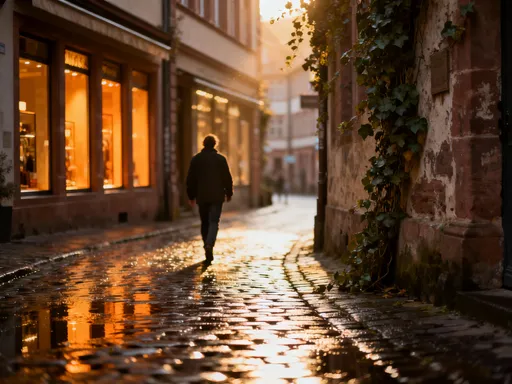
Rhodes Town, especially its UNESCO-listed Medieval City, stands as one of the best-preserved medieval urban centers in Europe. Enclosed within imposing stone walls built by the Knights of St. John in the 14th century, the old town pulses with a timeless energy. Walking along the cobblestone Street of the Knights, visitors are transported into a world shaped by chivalry, conquest, and craftsmanship. Towering Gothic facades with carved emblems, arched gateways, and shadow-drenched alleyways create a visual narrative of layered rule—Byzantine, Crusader, Ottoman—each leaving an indelible mark on the city’s architectural soul. This is not a reconstructed museum piece; it is a living, breathing neighborhood where history is not confined to guidebooks but lives in the texture of daily life.
For photographers, the Medieval City offers endless compositional opportunities. The key lies in timing and perspective. Early morning, just after sunrise, bathes the stone in a soft golden glow, minimizing harsh contrasts and revealing subtle tonal variations in the masonry. By 7:30 a.m., the narrow streets are largely free of crowds, allowing for unobstructed shots of architectural details—wrought-iron lanterns, weathered door knockers, and centuries-old hinges. Late afternoon, approaching golden hour, casts long shadows that enhance depth and dimension. Positioning oneself on elevated vantage points, such as the ramparts near the Palace of the Grand Master, provides panoramic views of red-tiled rooftops cascading toward the sea.
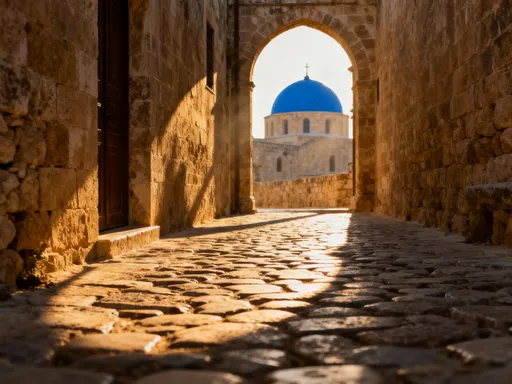
To truly capture the essence of the streets, consider using natural framing techniques. Doorways, arches, and overhanging balconies serve as organic picture frames, drawing the viewer’s eye into the scene. A telephoto lens can compress perspective, emphasizing the verticality of the buildings and the rhythm of repeating Gothic windows. Meanwhile, a wide-angle lens excels in capturing the full breadth of a cobblestone alley, especially when paired with leading lines that guide the viewer from foreground to background. Shadows, often overlooked, are powerful tools. The interplay of light and shadow across a stone wall can transform a simple façade into a study of contrast and texture.
The architecture itself tells a story of adaptation and endurance. The Street of the Knights, once housing the lodgings of knightly orders from across Europe, showcases distinct regional styles—French, Italian, German—each reflected in the ornamentation and layout. Though many buildings have been restored, efforts have preserved authenticity, using traditional materials and techniques. The blend of Gothic, Byzantine, and Ottoman elements illustrates how cultures coexisted and influenced one another over time. Photographing these details—the carved lions, the Arabic inscriptions, the arched fountains—is not just about aesthetics; it’s about documenting a legacy of resilience and coexistence.
Mandraki Harbor: Postcard Perfection with a Modern Pulse
Mandraki Harbor, with its iconic windmills and tranquil waterfront, is one of Rhodes’ most photographed locations—and for good reason. Nestled at the northeastern edge of the old town, this small but vibrant port blends historical charm with contemporary life. The three restored windmills, originally built by the Knights in the 18th century, stand as enduring symbols of the island’s maritime past. Nearby, the bronze deer statues—representing the myth of Rhodes’ founding—grace the harbor entrance, their elegant forms reflected in the calm waters at dawn. It’s a scene that effortlessly captures the imagination, offering both symmetry and spontaneity in a single frame.
Sunrise is the ideal time to photograph Mandraki. With the rising sun casting a warm hue over the windmills and the sky painted in soft pastels, the harbor takes on a dreamlike quality. Reflections on the water double the visual impact, creating mirror images that enhance balance and depth. A low-angle shot, taken from the edge of the quay, can include both the deer statues in the foreground and the windmills in the background, with the morning light glinting off the waves. A polarizing filter helps reduce glare and intensify colors, especially the deep blue of the sky and water.
Sunset offers a different mood—warmer, more dramatic. As the sun dips behind the old town, golden light spills across the harbor, illuminating the stone facades of the surrounding buildings. This is also when the harbor comes alive with locals and tourists enjoying coffee or cocktails at seaside cafés. Capturing this moment requires a shift in focus: from static architecture to dynamic human activity. A wide lens allows photographers to include both the historic backdrop and the lively atmosphere, creating images that feel alive and immediate. Long exposures, using a tripod, can blur the movement of boats or pedestrians, adding a sense of motion and passage of time.
While the windmills and deer are the obvious subjects, don’t overlook the smaller details. The fishing boats tied to wooden docks, the seagulls perched on stone railings, the potted geraniums on café tables—these elements add authenticity and warmth. The blend of old and new is part of Mandraki’s charm. Though it’s a popular spot, early arrival ensures quieter conditions, allowing for more contemplative photography. For those using drones, it’s important to note that flight regulations in Rhodes restrict aerial photography in historic zones without prior permission. Respecting these rules ensures both safety and preservation of the site’s integrity.
Hidden Courtyards of the Old Town: Secrets Behind Wooden Doors
One of Rhodes’ most enchanting photographic treasures lies beyond the public streets—in the hidden courtyards tucked behind unassuming wooden doors. These private oases, often invisible from the outside, reveal a different side of the old town: intimate, lived-in, and rich with character. Many of these courtyards belong to restored homes or boutique guesthouses, where owners have preserved traditional elements while adding personal touches—colorful ceramic tiles, climbing jasmine, iron lanterns, and mosaic fountains. Stepping into one feels like entering a secret garden, a quiet retreat from the bustle of the main alleys.
Photographing these spaces requires sensitivity and respect. These are private residences, not tourist attractions, so permission should always be sought before entering or taking pictures. When granted access, the reward is a wealth of visual storytelling. The asymmetry of these courtyards—uneven stone steps, mismatched tiles, off-center doorways—adds to their charm. Unlike the formal symmetry of grand palaces, these spaces feel organic, shaped by generations of use and care. Natural light filters through wooden shutters or above courtyard walls, creating soft pools of illumination that highlight textures and colors.
For composition, focus on contrasts: the roughness of stone against the delicacy of flowers, the warmth of wood against cool tile. A medium telephoto lens works well for capturing intimate scenes without distortion. Look for repeating patterns—rows of potted herbs, stacked terracotta pots, or the geometric design of a tiled floor. These elements can serve as focal points or background textures. Early morning light, entering from one side, creates depth through shadows and highlights, emphasizing the three-dimensionality of the space.
Some courtyards are open to the public during cultural events or heritage days, offering rare opportunities for photography. Others may be accessible through guided tours of historic homes or boutique accommodations. Even glimpsing a courtyard through a slightly ajar door can inspire a powerful image—framed glimpses suggest mystery and invite curiosity. The key is to approach these spaces with reverence, recognizing that they are not just backdrops but homes, filled with memory and meaning. Capturing their essence is less about perfection and more about authenticity—the quiet beauty of a place shaped by time and care.
The White & Blue Magic: Rhodes’ Cycladic Touch Beyond Santorini
While Rhodes is not part of the Cyclades, it shares a visual kinship with islands like Santorini and Mykonos through its use of white-washed buildings and blue-domed churches. This aesthetic, often associated with the Cyclades, appears in pockets across Rhodes, particularly in villages nestled in the island’s interior. In places like Afandou, Archangelos, and Salakos, whitewashed churches with cobalt-blue domes rise above terracotta rooftops, set against rolling hills and olive groves. These scenes offer a serene counterpoint to the medieval grandeur of the old town, evoking a quieter, more contemplative side of the island.
Photographing these villages requires patience and timing. Mid-morning light, when the sun is high, can wash out colors and flatten textures. Instead, aim for the early hours, when soft light enhances the contrast between white walls and blue domes. Late afternoon, as the sun begins to lower, casts a golden warmth that softens the starkness of the white masonry. Positioning oneself on a nearby hillside or roadside vantage point allows for wide-angle shots that include both the church and its natural surroundings. Using natural frames—such as olive branches, stone walls, or archways—adds depth and context to the composition.
The blue domes themselves are more than decorative; they carry symbolic meaning. In Greek Orthodox tradition, the blue represents the heavens, while the dome signifies the sky vault. This spiritual dimension adds a layer of meaning to the images, transforming them from simple postcards into visual meditations. Close-up shots of the dome’s curvature, the texture of the paint, or the way light reflects off its surface can convey both beauty and significance. Including human elements—a priest locking the church door, children playing nearby—can ground the image in daily life, bridging the sacred and the everyday.
These villages are often less crowded than Rhodes Town or Lindos, making them ideal for unhurried exploration. Renting a car allows access to remote areas, where quiet lanes wind through vineyards and orchards. Always park respectfully and avoid trespassing on private property. The goal is not just to capture beautiful images, but to do so with mindfulness and courtesy. In these quieter corners, Rhodes reveals a different rhythm—one of stillness, simplicity, and enduring tradition.
Ottoman Echoes: Mosques, Baths, and Quiet Symmetry
Amid the predominantly Christian landscape of Rhodes, the remnants of Ottoman rule stand as quiet testaments to the island’s multicultural past. The Suleymaniye Mosque and the nearby Ottoman baths are among the most significant Islamic structures on the island, offering photographers a chance to explore symmetry, light, and architectural harmony. Built in the 16th century during Ottoman occupation, the Suleymaniye Mosque features a central dome, a slender minaret, and elegant arched windows. Though no longer used for regular worship, it has been preserved as a cultural site, its stone façade weathered but dignified.
Photographing the mosque requires a different approach than Christian churches. Islamic architecture emphasizes geometric order, balance, and the interplay of light and space. The courtyard in front of the mosque, with its stone fountain and shaded arcades, provides a serene setting for composition. A wide-angle lens captures the full symmetry of the façade, while a telephoto lens can isolate details—the calligraphy above the entrance, the pattern of the stonework, the shadow of the minaret stretching across the ground. Early morning, when the sun strikes the eastern side of the building, highlights the texture of the stone and creates long, dramatic shadows.
Inside, the prayer hall is quiet and contemplative, with natural light filtering through high windows. The absence of figurative art focuses attention on architectural elements—arches, vaults, and the play of light on whitewashed walls. A tripod may be necessary to capture interior shots in low light, especially if aiming for long exposures that emphasize stillness. Reflections on polished stone floors can double the visual impact, creating mirror images that enhance the sense of balance.
Adjacent to the mosque, the Ottoman baths—hammam—offer another layer of historical texture. Though partially in ruins, the domed chambers with their small ventilation holes still convey the atmosphere of ritual cleansing and social gathering. These spaces, often overlooked by tourists, provide unique opportunities for moody, atmospheric photography. The interplay of light and shadow in the vaulted rooms evokes a sense of timelessness. Respecting these sites as part of Rhodes’ shared heritage means photographing them with care, avoiding staged or disrespectful poses. Their preservation is a reminder that history is not singular, but layered—a mosaic of faiths, cultures, and coexistence.
Village Charm: From Lindos Acropolis to Monolithos Castle
The hilltop villages of Rhodes offer some of the most dramatic and photogenic landscapes on the island. Lindos, with its ancient acropolis perched above a cluster of whitewashed houses, is perhaps the most iconic. The contrast between the massive Doric columns of the Temple of Athena Lindia and the delicate, cascading homes below creates a powerful visual narrative. Reaching the acropolis involves a climb up a steep path lined with artisan shops, but the effort is rewarded with panoramic views of the Aegean Sea and the surrounding coastline. For photographers, the challenge lies in balancing the grandeur of the ruins with the intimacy of the village life below.
To avoid the midday crowds, arrive early—ideally before 8 a.m. At this hour, the light is soft, the air is cool, and the acropolis is relatively quiet. The golden glow of sunrise illuminates the ancient stones, enhancing their texture and warmth. A wide-angle lens captures the full scope of the site, while a telephoto lens can isolate details—the weathered inscriptions, the play of light on a column capital, or a lone figure silhouetted against the sea. Including local elements—such as a resident tending to potted plants on a terrace—adds humanity to the scene.
Further west, Monolithos Castle offers a more secluded experience. Perched on a sheer 236-meter rock, this 15th-century fortress provides breathtaking views of the coastline and the sea. Unlike Lindos, it sees fewer visitors, making it ideal for contemplative photography. The journey to the site involves a narrow, winding road, but the isolation enhances its mystique. Midday light, often harsh in other locations, works well here—it emphasizes the rugged texture of the stone and the dramatic contours of the landscape. A polarizing filter enhances the contrast between the blue sky and the white rock, while a graduated neutral density filter helps balance exposure between the bright sky and darker foreground.
Drone photography is popular at these sites, but regulations must be observed. In Greece, drone use in archaeological zones and near historical monuments requires authorization from the Ephorate of Antiquities. Unauthorized flights can result in fines and confiscation of equipment. Even without a drone, powerful images can be captured from ground level by using elevation, perspective, and patience. The key is to let the landscape speak for itself—its drama needs no exaggeration.
Beyond Stone: The Living Texture of Rhodes’ Architecture
While grand vistas and historic monuments capture attention, some of Rhodes’ most compelling photographic moments come from close observation. The island’s architecture is rich with small, often overlooked details—wrought-iron grilles, wooden shutters, hand-painted signs, and bougainvillea spilling over stone walls. These elements are not mere decoration; they are expressions of daily life, craftsmanship, and adaptation to climate and culture. A macro lens reveals the texture of centuries-old wood, the patina of oxidized metal, and the delicate veins of a flower petal clinging to a wall.
Wrought-iron balconies, common in the old town, are particularly photogenic. Their intricate scrollwork casts lace-like shadows on whitewashed walls, especially during mid-morning and late afternoon. Shooting from below, using a low angle, emphasizes their ornate design against the sky. Similarly, wooden shutters—often painted in deep blue, green, or burgundy—add color and character. Many are slightly ajar, hinting at life within. A close-up of a shutter with a flowerpot on the sill, backlit by soft light, can be more evocative than a wide shot of a landmark.
Bougainvillea is another recurring motif, its vibrant magenta or purple blooms cascading over walls and archways. The contrast between the vivid flowers and the neutral stone creates a natural focal point. A shallow depth of field can blur the background, making the blooms stand out sharply. Wind can be a challenge, so using a faster shutter speed or shooting on calm mornings helps achieve sharp images. These details, when collected over time, form a visual diary of the island—a portfolio not of monuments, but of moments.
For photographers, mastering texture means paying attention to light direction, lens choice, and composition. Side lighting enhances surface detail, while backlighting can create silhouettes or highlight translucency. A tripod ensures stability for detailed shots, especially in lower light. But beyond technique, the most important tool is patience. Slowing down, observing, and waiting for the right light or moment transforms photography from documentation into connection.
Framing the Soul of Rhodes
Photographing Rhodes is not just about capturing beautiful buildings or scenic views; it is about engaging with a living history, a place where stone, light, and human presence converge. Every archway, every courtyard, every sunlit wall carries a whisper of the past—of knights and sultans, of fishermen and farmers, of generations who shaped and were shaped by this land. The island invites not just the eye, but the heart. It asks travelers to slow down, to look closely, and to listen.
The most powerful images are not always the most dramatic. Sometimes, it’s a shadow on a wall, a flower in a crack, or the reflection of a dome in a puddle after rain. These quiet moments reveal the soul of a place more profoundly than any postcard vista. They remind us that travel is not just about where we go, but how we see. In Rhodes, the stones do not shout—they whisper. And if we take the time to listen, they tell stories worth remembering, one frame at a time.